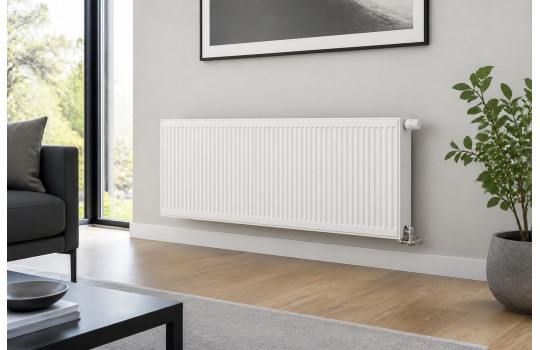
A radiator is part of a complete heating system, not just a visible panel under the window. The right choice depends on heat loss, water temperature, operating pressure, connection type, dimensions and how the room will be controlled.
The most reliable selection begins with the heat demand of the room. Area-based rules can be used only for orientation: ceiling height, windows, insulation, external walls and supply temperature can change the required output significantly.
Individual heating systems often work well with steel panel radiators, but the radiator must match the system pressure, water quality and temperature schedule. Low-temperature systems usually need a larger heat-exchange surface.
Radiators with similar height and length can have different depth and heat output. When replacing an old radiator, compare type, length, height, depth, centre distance, connection side and valve position.
A radiator needs free air movement. Deep window sills, decorative screens, curtains or furniture can reduce heat output. Leave enough space from the floor, wall and sill according to the installation recommendations.
Thermostatic valves help control room comfort, but they work correctly only when the system is balanced. Oversized radiators without balancing can overheat rooms and make regulation unstable.
The most common mistakes are choosing only by size, ignoring pressure, replacing without checking connection type, hiding the radiator behind furniture and expecting the same output from a lower supply temperature.
| Factor | What it affects | Practical check |
|---|---|---|
| Heat output | Comfort and ability to heat the room in cold weather. | Base the choice on heat loss or a heating project, not only room area. |
| Temperature schedule | Lower water temperature requires a larger heat-exchange surface. | Compare radiator output at the actual system temperatures. |
| Pressure and water quality | Incorrect conditions shorten service life. | Check compatibility with the building heating system. |
| Dimensions and connection | A similar-looking radiator may not fit the existing pipework. | Confirm height, length, depth, centre distance and connection side. |
| Control | Thermostatic valves work well only with balanced flow. | Plan valves and balancing together with the radiator. |


